

A speech I gave at the BWI Architecture Summit 2026 · Nuremberg, Germany · April 21, 2026 · 20 minutes plus 5 minutes of Q&A.
Opening-day talk at BWI’s annual architecture summit. BWI GmbH is the IT service provider for the German Armed Forces (Bundeswehr), and the audience was roughly 150 architects from a deeply technical, security-conscious, government IT background. Brian spoke in English; the rest of the summit was in German. The talk framed the day’s discussions. Slides (PDF).
Credibility and framing
Opened by establishing 32 years of IT experience, explicitly distancing from the “25-year-old vibe coder” archetype: a military family background, seven years in Washington D.C. working for large government contractors with security clearances. Deliberate positioning for a military IT audience — not a theorist, but someone who has worked in their world and understands real government IT constraints.
The invisible 80% of knowledge work
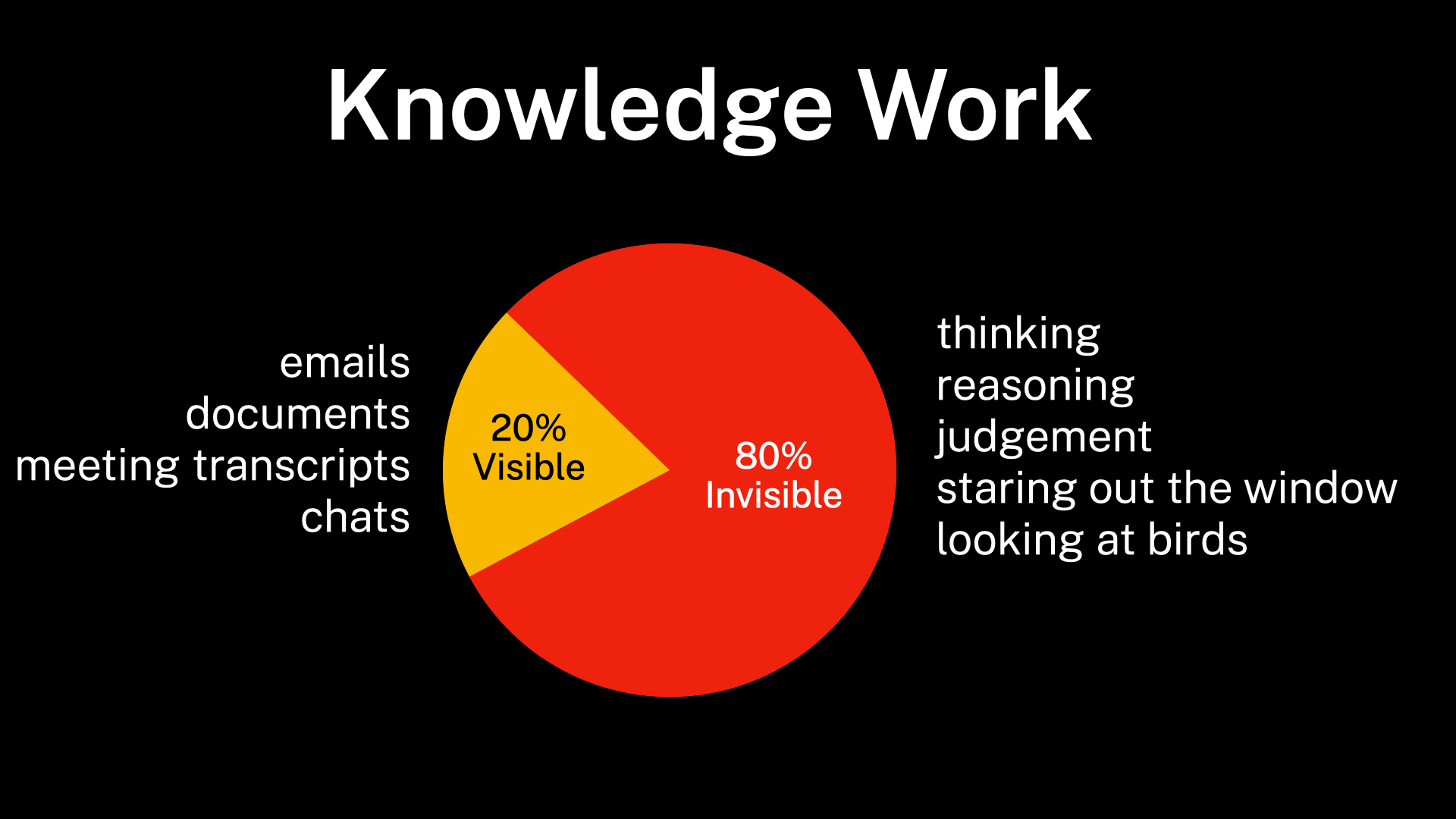
The core 80/20 argument: emails, documents, meeting transcripts, and chats are the visible 20%, the artifacts of knowledge work, not the work itself. The real work is thinking, reasoning, judgment, and staring out the window looking at birds. “The reason you get paid more and more money as you get older and your career progresses is not because you write better emails, it’s because you can think more effectively.” Enterprise AI targets only the visible 20%, which is why the ROI headlines are so dismal: “I can AI the crap out of this little portion right here. I did not change work. I changed the output of work.”
The cognitive stack
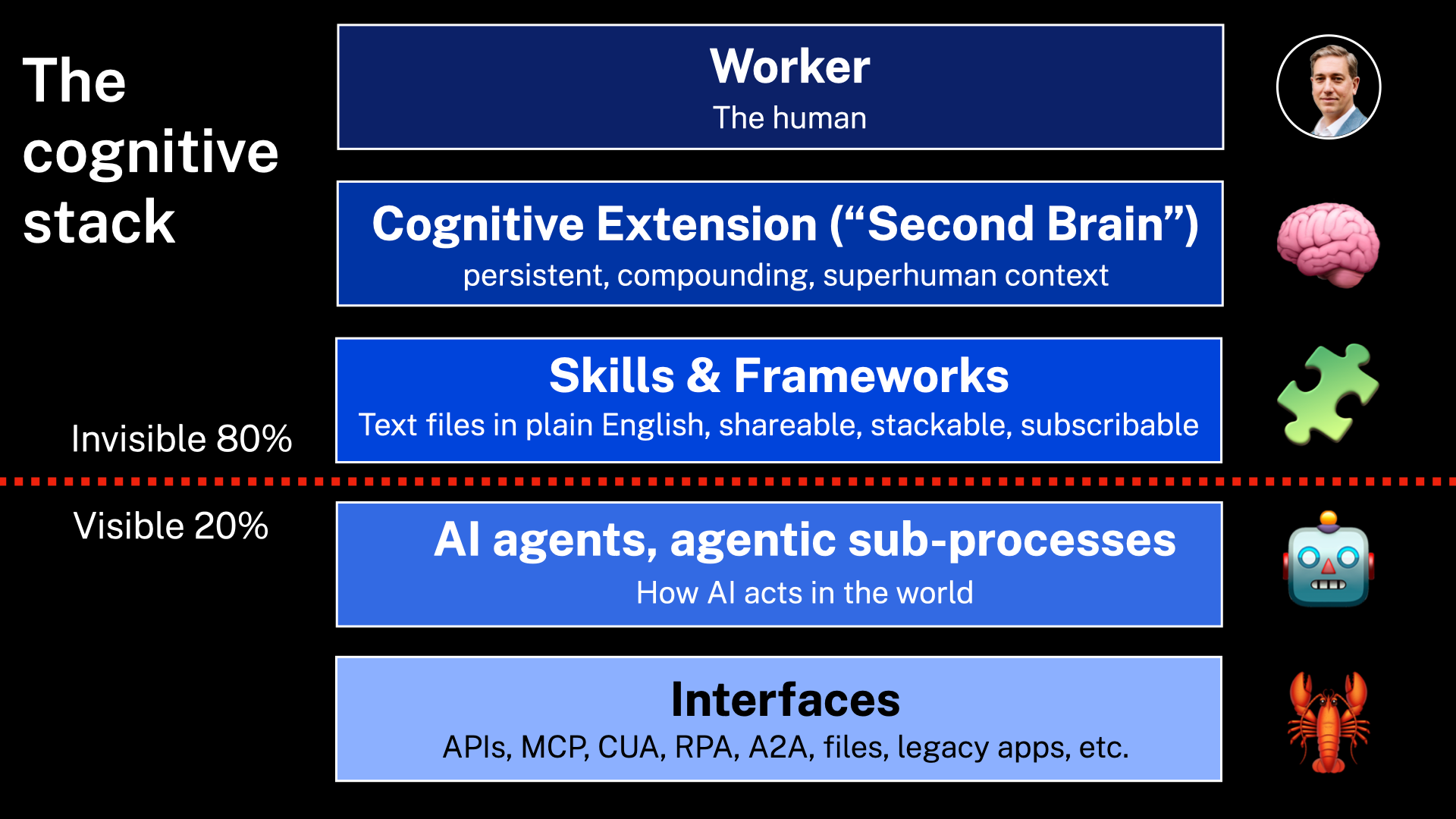
A five-layer model: worker, cognitive extension (second brain), skills and frameworks, AI agents, interfaces and connectors. The 80/20 line sits between skills (invisible) and agents (visible). The second brain gets explained through the evolution of how people use AI — from “better Google,” to analysis, to context-loaded generation. The breakthrough: instead of uploading documents to AI each time, point AI at files on your computer and let it maintain them. “Within two hours, I realized I’m never going back to working the way I worked before. This changed everything for me.”
Skills and the real world
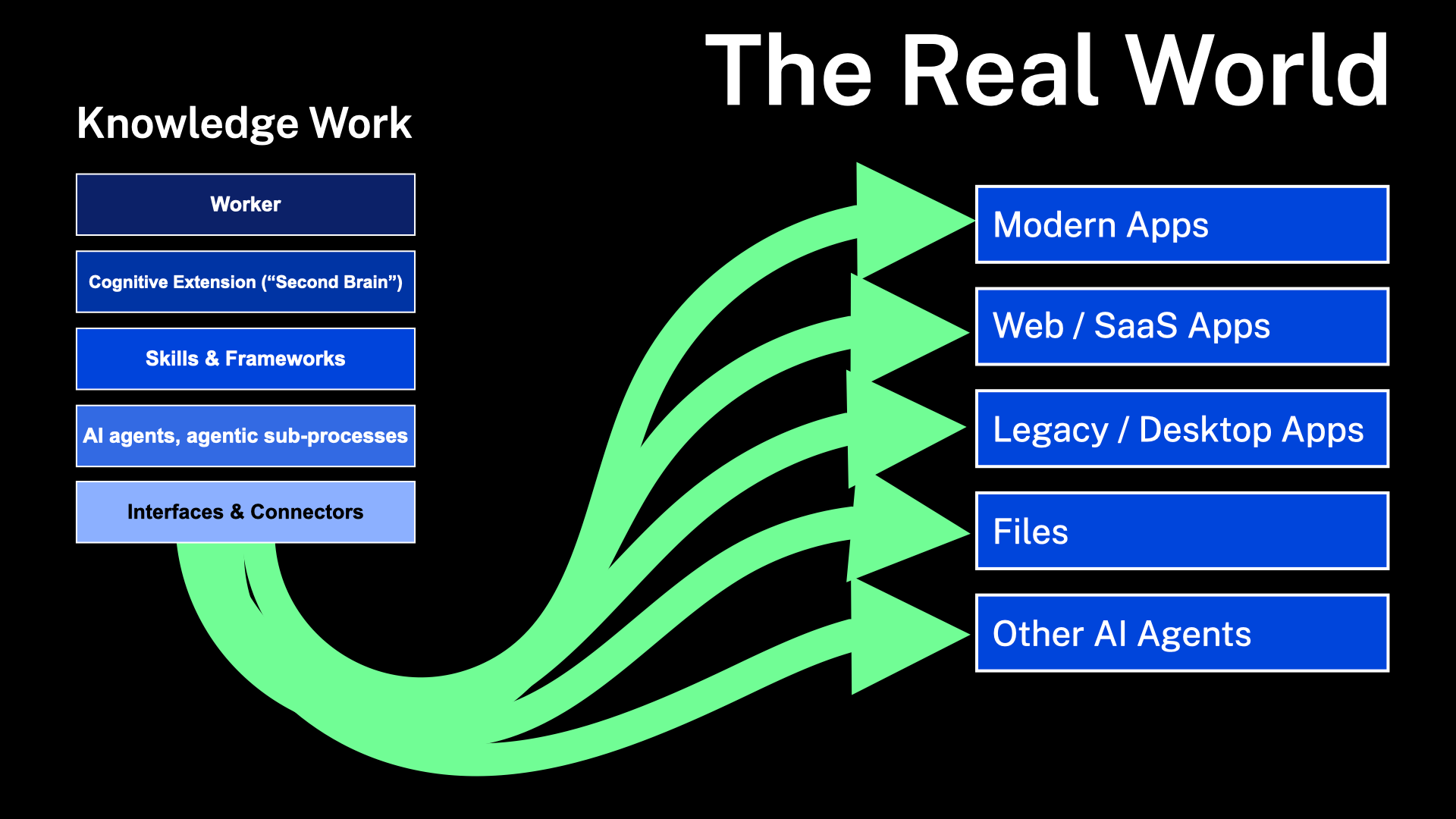
Skills are plain text files that explain how to do things. “If you can write instructions to describe to a colleague or your mother how to do something, you can write a skill.” The cognitive stack maps onto real-world application categories: modern apps via APIs, web and SaaS apps via browser control, legacy and desktop apps via computer-using agents, files, and other AI agents.
This is not about automations
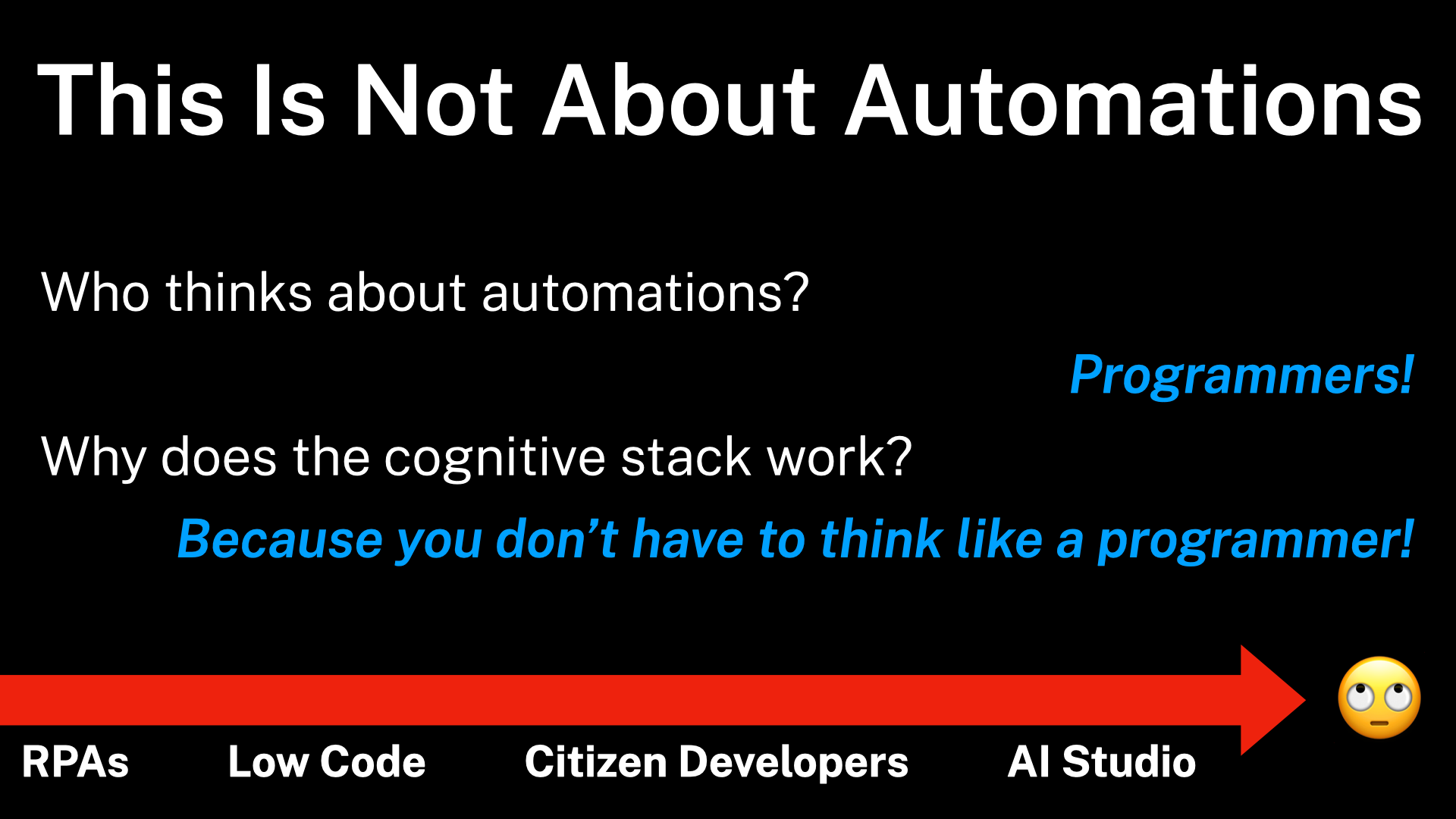
“If you have a task that can be automated, you are a task worker. We have been automating task workers for decades.” The cognitive stack works precisely because “you don’t have to think like a programmer.” RPAs, low-code, citizen developers, AI Studio — all of it is programmer-thinking applied to non-programmers. The cognitive stack bypasses all of it.
The token squeeze
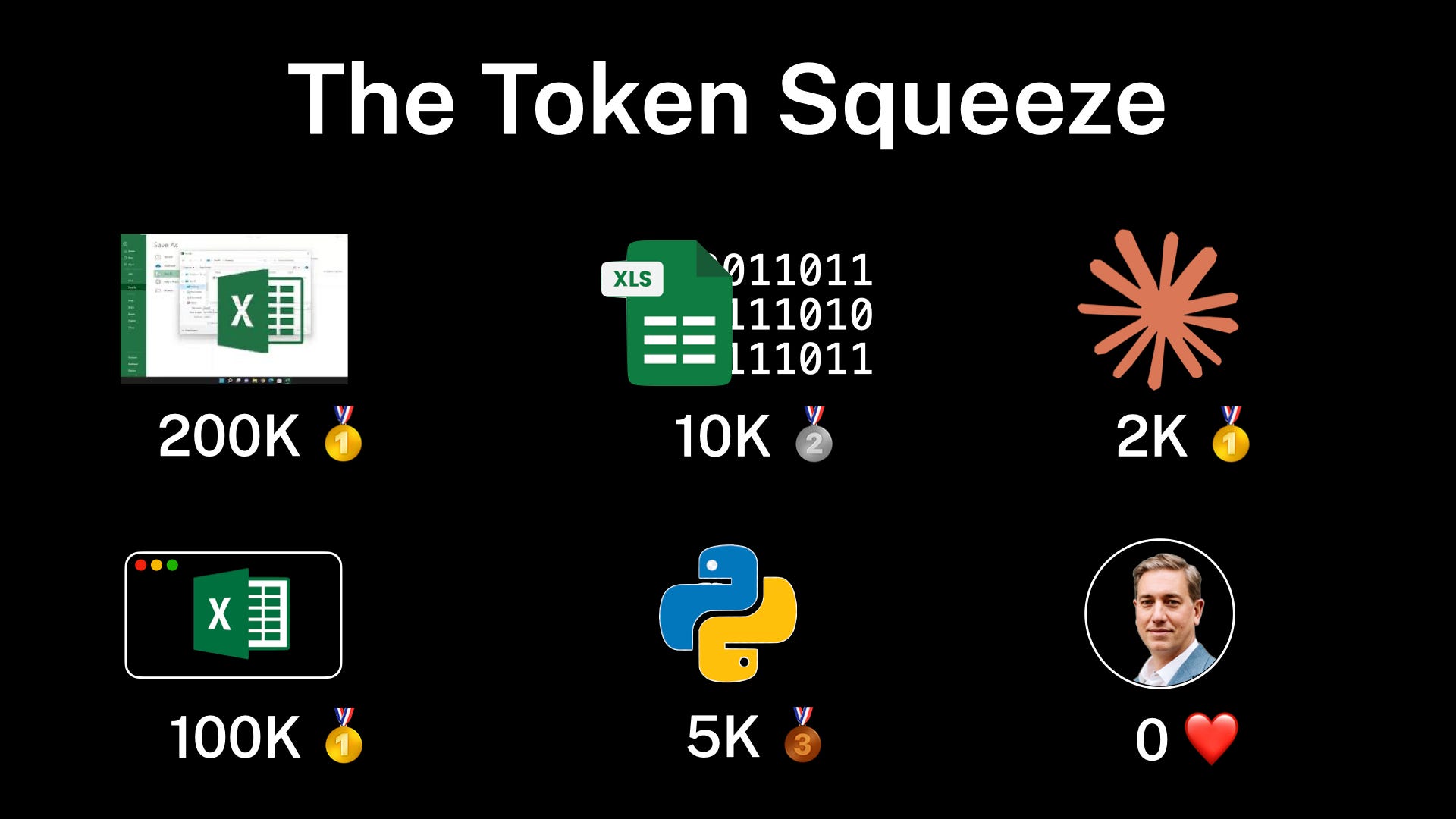
Token economics via the Excel routing example: six approaches to the same task, ranging from 200K tokens (a computer-using agent operating desktop Excel) down to zero tokens (a human just does it). “Someone somewhere has to look at every request coming through and figure out which tokens should go for which requests.” Brian’s own usage went from a few million tokens a month to 200 million tokens a month once he adopted a cognitive extension. “There is not enough compute, GPUs, data centers, power, electricity in the world for everyone to be using 200 million tokens per month.”
Q&A: trust in AI
Stop waiting for AI to get “good enough” before trusting it. “AI has to be better than your worst employee. We all know who that is.” Apply the same guardrails to AI that already apply to humans: session recording, security logging, limited capabilities, dedicated login IDs. “AI is not software. You cannot think of it as software. You have to think of it as a colleague.”