

My talk from the Wharton Tech Conference 2026, “Blueprints for Tomorrow” · University of Pennsylvania, Tangen Hall, Philadelphia · February 6, 2026 · ~35-minute keynote to ~200–300 Wharton MBA and UPenn students, plus extended Q&A.
The best technology rarely wins. Thirty-two years of watching superior products lose to inferior ones, promising initiatives stall, and “transformations” that never quite transform, comes down to one thing: the people building and selling technology systematically misunderstand how change actually happens inside organizations. Using AI as the primary example — the most dramatic case of these dynamics playing out right now — the talk covers why worker-led transformation beats top-down initiatives, what actually determines adoption speed (hint: not the tech), and how to think about a career as the world shifts from doing the work to orchestrating it.
The bottleneck framework
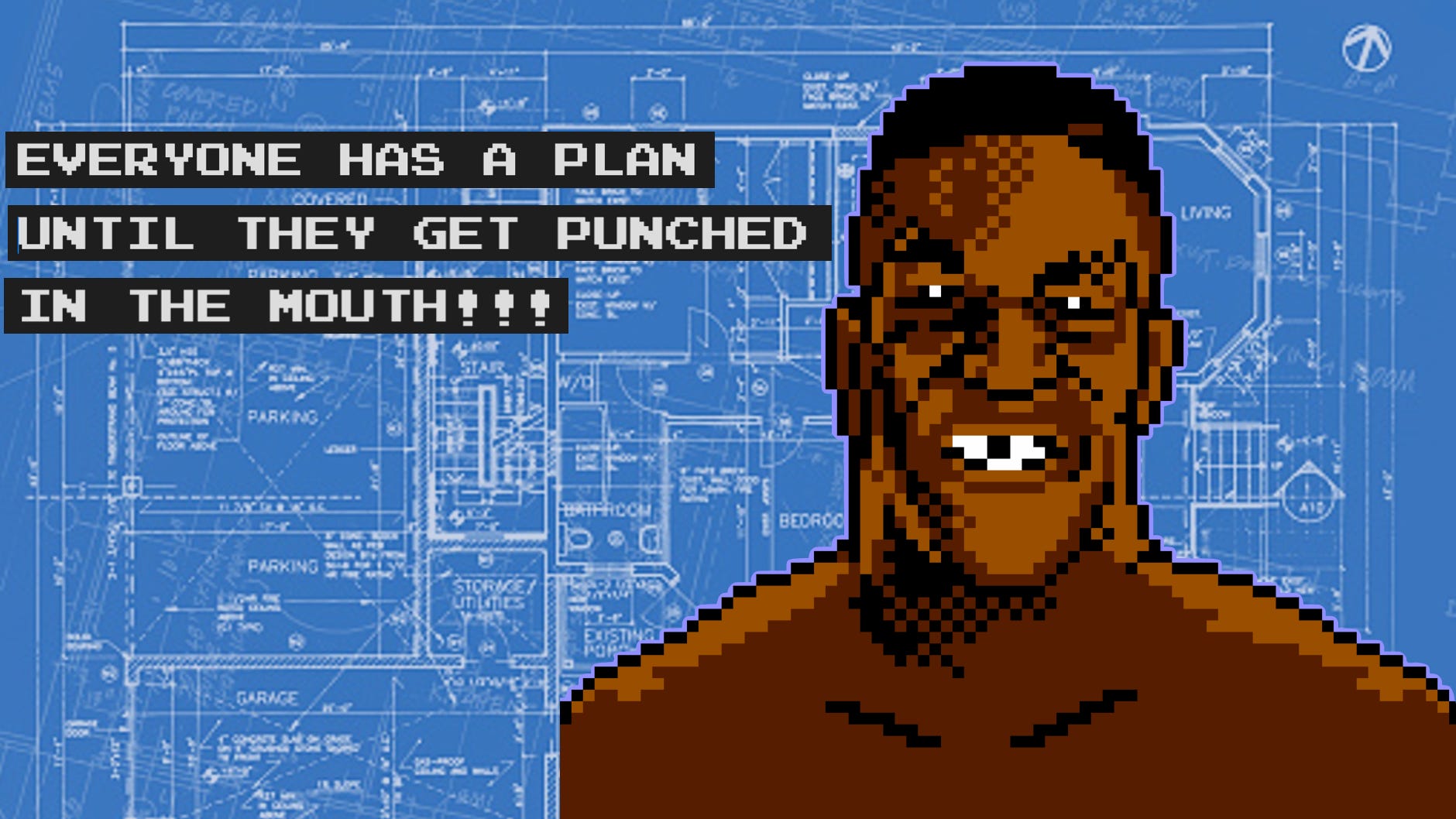
“Everyone has a plan until they get punched in the mouth.” In the enterprise, the bottleneck does the punching. Every technology wave has one. It’s never where you expect. It determines whether blueprints become reality or stay blueprints. “The bottleneck is where the value concentrates. That’s where leverage lives. That’s where careers are made.”
Factory electrification
1880s factories ran on centralized steam power, driveshafts, and leather belts, with machines arranged by power requirements, not workflow. Electricity arrived, and factories simply swapped steam engines for electric motors — same layout, same processes, minimal gain. Then individual electric motors went on each machine — still the same layout, still marginal. The breakthrough came only once machines were independent enough to rearrange by task order: the birth of the assembly line, with cheaper, better-quality production. That wasn’t easy — inventory, storage, building layout, and raw-materials flow all had to be redesigned. New technology plugged into old structures changes nothing; transformation only happens when you redesign around the bottleneck. The whole process took about 50 years. The bottleneck was never the motors. It was the workflow design built around the old system.
The 30-year web migration
In the 1990s, Windows apps were stuck in the office, and the web was supposed to kill Windows: instant access, any device, anywhere, update once, better security, no data on the endpoint. The catch was always “just rewrite all your applications from scratch” — that’s the bottleneck. Java, Flash, AJAX, Silverlight, HTML5, SaaS, Linux, Chrome, mobile, PWAs, cloud — every one of them was going to kill the old way, and none of them did. “AI is going to kill the old way. And I’m like, please.” It’s the factory story again: plug new tech into old constraints, and of course it doesn’t work. Citrix was born to solve exactly this bottleneck, giving enterprises the advantages of web apps while keeping their existing Windows apps. They identified the bottleneck — implementation — and bypassed it. Multi-billion-dollar company, 37 years later.
Workers take power: consumerization
In 2007, Steve Jobs announced the iPhone — the first time consumer technology was genuinely better than enterprise technology. Workers bought iPhones and wanted to connect them to work; the company said no, not secure, not compliant, not managed. Workers didn’t care. Eventually enterprises figured out governance — MDM, containerization, work/personal separation — but it took about five years, 2007 to 2012, before an iPhone was really usable for work at a big company. Same factory story: the tech worked on day one. The bottleneck was the governance companies needed to build.
AI: removes all the bottlenecks, right?
AI should have no bottleneck at all. Workers don’t need IT to rewrite anything. Tools are instantly productive. Twenty dollars a month for ChatGPT is immediate value — consumerization on steroids, no permission needed. “You literally cannot block this. Point the phone camera at your laptop screen and now you have all the data on your phone.” Everyone is panicking or excited; CEOs have FOMO, and “the CEO’s AI strategy is to not be Blockbuster Video in the Netflix documentary.” And yet AI projects are failing — the (later-debunked, but directionally correct) MIT study got cited everywhere, though big transformation projects fail anyway and don’t need AI’s help to do it. So where’s the bottleneck? The tech works. Governance is hard, but harder problems have been solved before. Something different is happening.
The shift: apps to knowledge, the invisible 80%
Every previous wave of change was about things you can see — motors, devices, apps. AI is about knowledge: invisible, fluid, personal, living in people’s heads. Organizations are massive knowledge machines where the cogs are humans using their knowledge brains; you can only ever see the outputs. The 20% you can see is emails, documents, meeting transcripts, schedules, decisions. The 80% you can’t see is thinking, reasoning, staring out the window, looking at birds — sometimes you just need to walk the dog, or take a shower. (A nod to Severance: “those workers don’t have any bird time.”) The bottleneck: consultants and IT only ever see the 20%, and build solutions for the visible part, which of course don’t work. Workers succeed with AI because they have access to their full 100%. That’s why a $20-a-month ChatGPT subscription beats a million-dollar enterprise AI project — not because of the technology, but because of access to the invisible 80%. Stop using AI to solve the 20% problem. AI as a tool for emails and summaries is the 20% — that’s what most enterprise projects focus on, and that’s why they fail. Microsoft Copilot at $30 a month to help write emails: “that’s a cool feature, it should be free.”
Using AI to solve the 80% problem
“For three years, I used AI wrong” — as a tool for specific tasks. The shift was to stop using AI like a tool and start using it to unlock thinking: a personal knowledge system built with Claude Code and files on his computer, containing everything he knows, does, has written, and how he thinks. “Now I can query my own knowledge. It is a true knowledge partner. It is my 80%. Now it has a helper.” It’s always updating — conversations, notes, calls, instructions, ideas, story arcs, synthesis, people, to-do lists all go in. “This is not an app I created. This is a pattern of usage.” The call to the audience: start today. Ask your AI to build a personal knowledge system, take everything it knows about you, and go — Claude, ChatGPT, Gemini, the model doesn’t matter. Start with your own writing and content and let it compound from there. “I had the holy shit red pill moment twice in my career. Once when ChatGPT clicked. And again a few weeks ago with this.”
Close
“They had electricity and motors for 50 years before they found the bottleneck. Once they did, they rearranged the machines. That’s what you’re going to do — not with machines, but with knowledge.” Every company on planet Earth needs to rearrange its machines, but the machines are knowledge workers and knowledge processes. When everything is changing too fast, when everything seems crazy, ask yourself where the bottleneck is, and position yourself there.
Extended Q&A
On Citrix’s own bottleneck: “Same as everyone else’s.” Every company faces the same fundamental challenge of rethinking how AI fits beyond traditional technology-transformation patterns; the answer is always about redesigning around new capabilities, not just adopting new tools. “I pay $100 a month for Claude Max. But I cancelled ~$200 worth of other subscriptions. I don’t use Excel. I don’t use ToDo apps. I don’t use Feedly.”
On why blog in the AI age: after roughly fifteen years running BrianMadden.com, thousands of articles, six books, a tech conference, and training material, then selling it, the insight now is “I blog for AI, not for people. No one reads anymore” — blog posts feed the knowledge system and become seed material for the AI brain. The vision is to publish the whole knowledge system on GitHub as an open-source-brain project, with file-by-file, line-by-line attribution and provenance of ideas — when everyone has a knowledge brain, you can forensically trace ideas back to their origin. On connecting brains: imagine plugging trusted people’s AI brains together, like a Wharton study group’s brains linked to each other. On whether AI makes people dumber: if you use it to outsource your thinking, you’ll get worse at thinking; if you use it to outsource your busy work — filing, processing, transcription — you get to focus on actual thinking.
On how startups differentiate when models are commoditized: models are like CPUs. “Intel Inside” used to matter; nobody buys a laptop for its CPU brand anymore, and AI models are heading the same way. Brian’s own system is all instructions and files — Gemini today, Claude tomorrow, it doesn’t matter. Startups shouldn’t build something the next model release makes obsolete: assume AI keeps getting smarter and its dumb mistakes stop being a thing, and build for where AI is going rather than where it is. Klarna spent $10M on a custom system built on GPT-3.5; GPT-4 did everything better on day one.
On practically building a personal knowledge system: don’t be afraid of Claude Code if you’re not a coder — “it’s just a button that says Code. All that means is it can access files on your computer.” The structure is file folders of Markdown text: roughly 80% knowledge (blogs, transcripts, articles, feeds) and 20% instructions the system writes for itself, with a readme-first file so any model can orient itself. Still 50-plus conversations a day, all in the context of the system. One feature came from just describing it: screenshot a podcast on his phone while walking, and the system finds the episode, pulls the transcript, extracts context at the timestamp, and files it. Overnight, GitHub Actions run a “dreaming” process — the system scans everything, finds connections, does scenario planning, and presents a morning briefing. Everyone’s system ends up different, and that’s the point: “you can’t pick up your bar with someone else’s laptop.”
Key formulations
“The bottleneck is where the value concentrates. That’s where leverage lives. That’s where careers are made.”
“AI is going to kill the old way. And I’m like, please. Come on, really? I’ve heard this story before.”
“You literally cannot block this.”
“CEO’s AI strategy is to not be Blockbuster Video in the Netflix documentary.”
“I blog for AI, not for people.”
“I had the holy shit red pill moment twice in my career.”
“Every company on planet Earth needs to rearrange its machines.”
“When everything seems crazy, ask yourself: where’s the bottleneck?”